Tyrannosauroid Series
36 × 18 in
Linoleum Block Print
December 2025
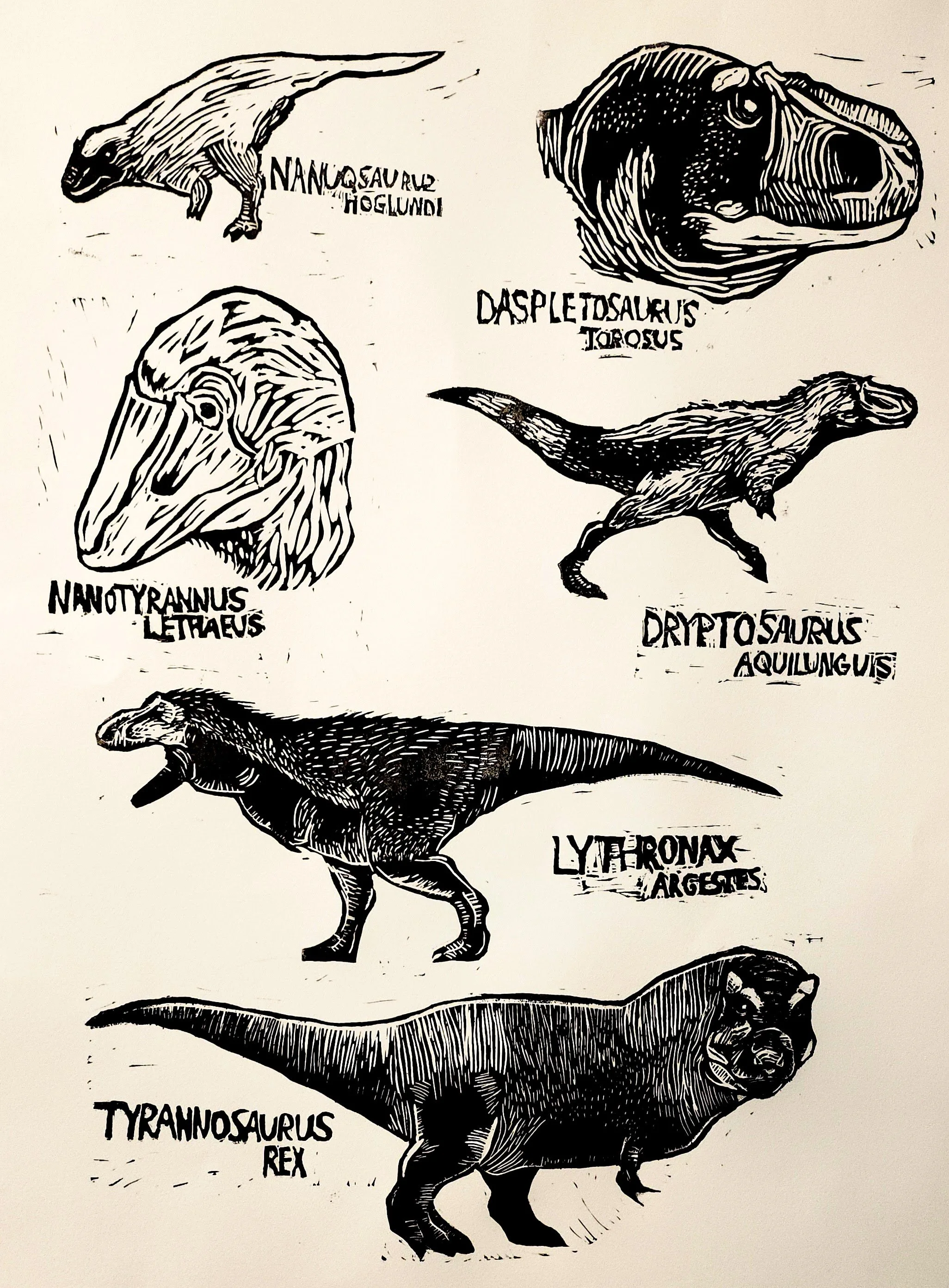
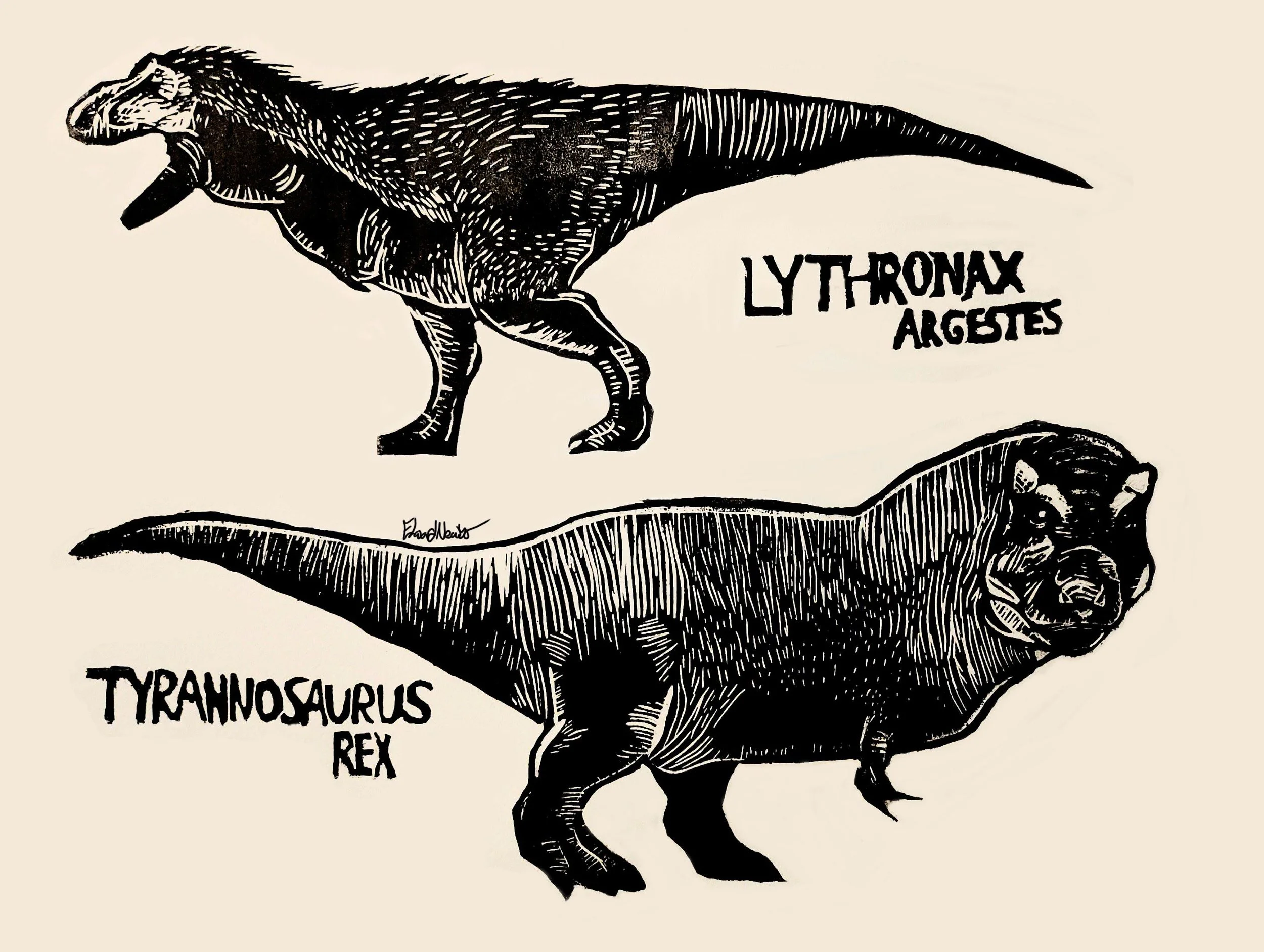
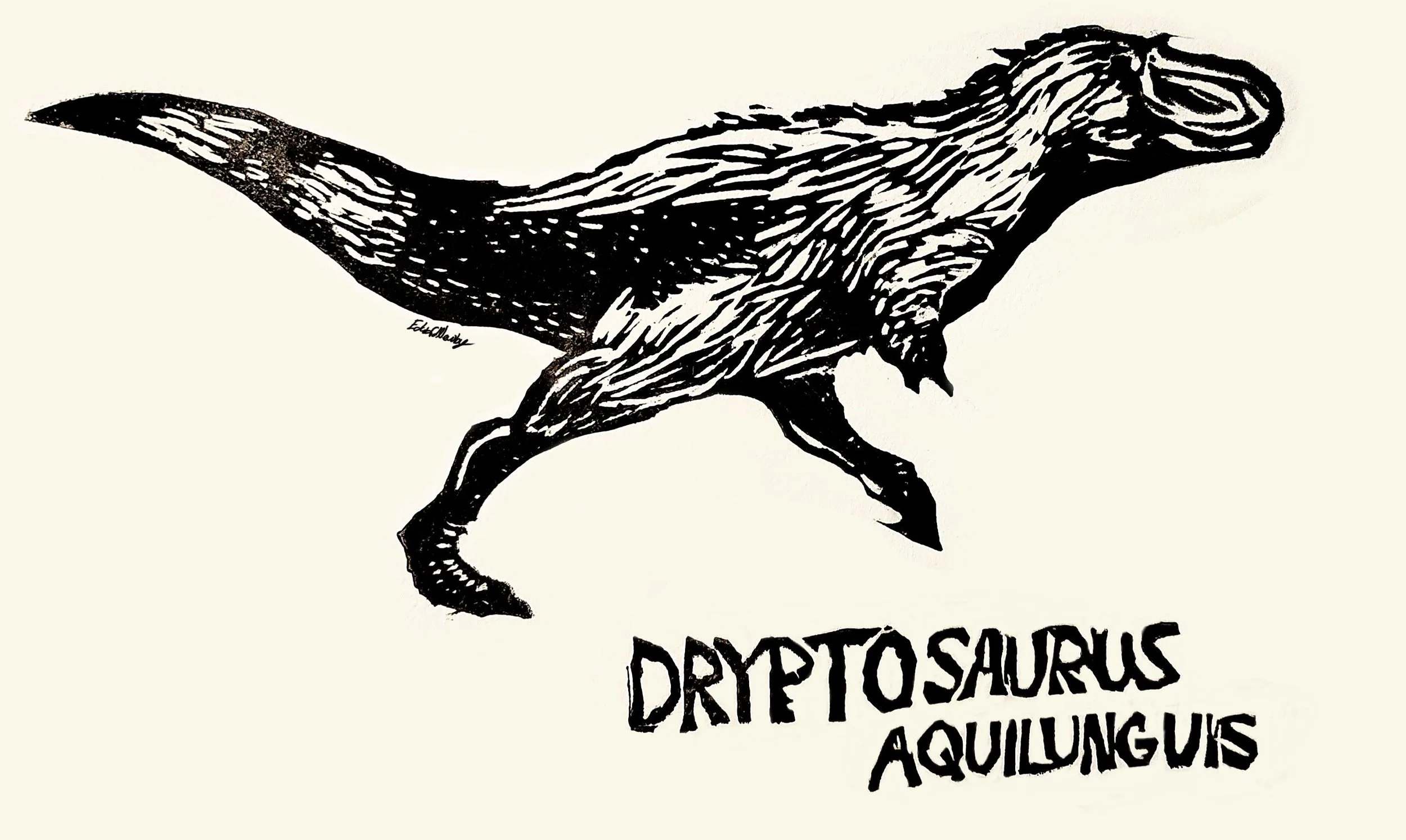
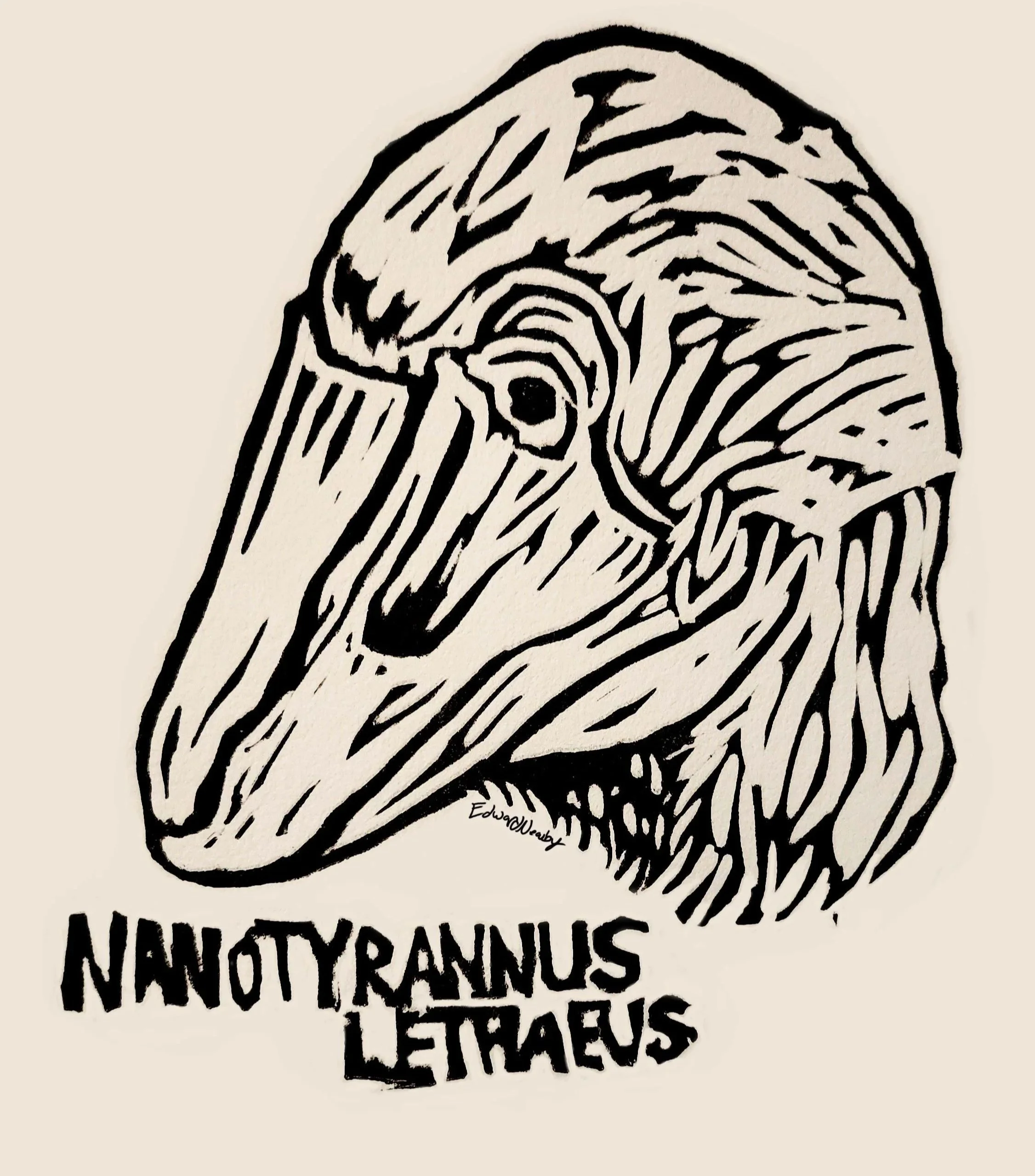
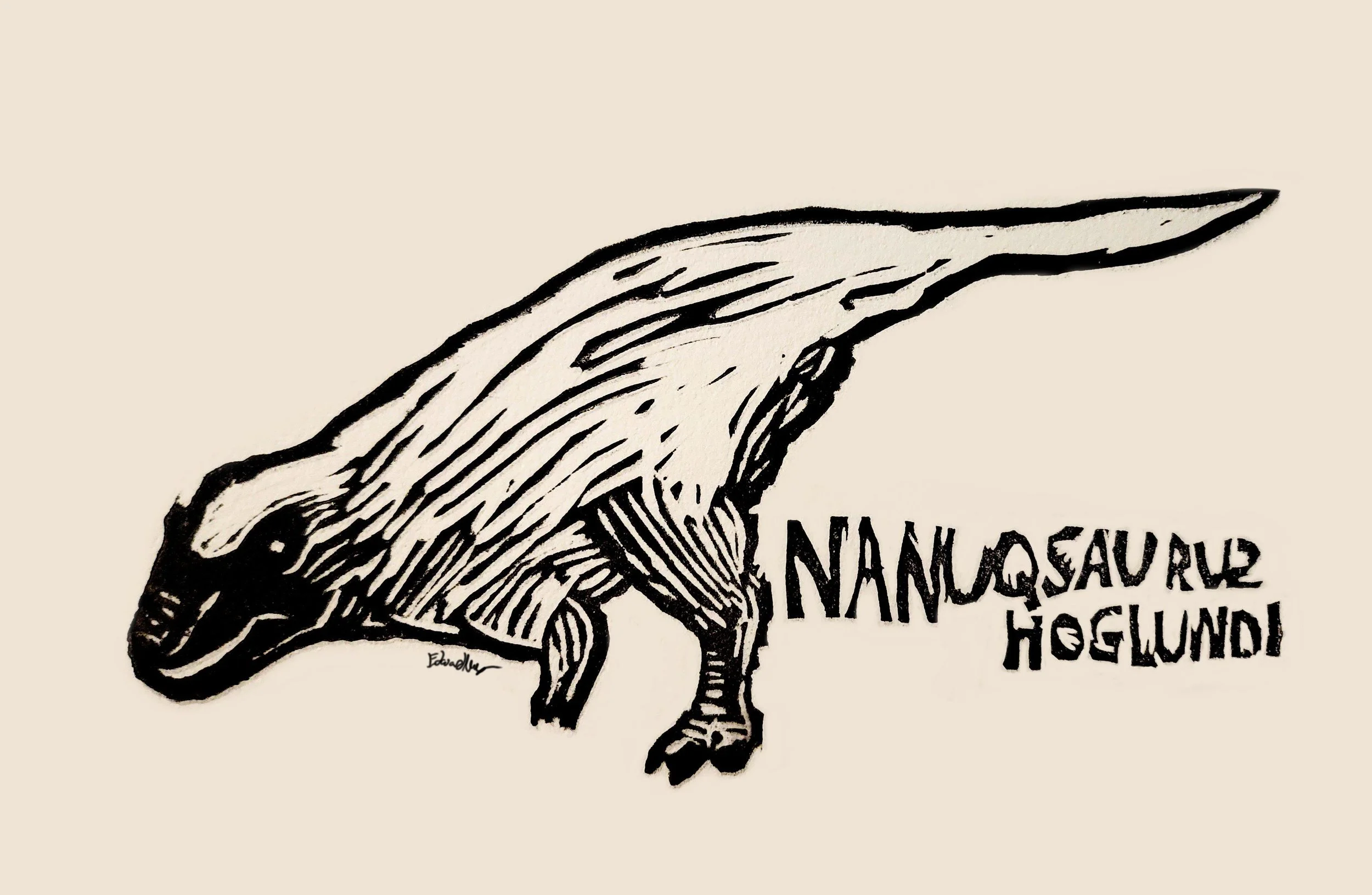
This series of prints aims to illustrate the remarkable variety within the super-family Tyrannosauroidea. All these interesting differences hint to the eons of unknown ecosystems that influenced how these animals look. Of the six selected species, only Tyrannosaurus and Nanotyrannus coexisted in the same habitat at the same time. The rest existed in different regions of early to late Cretaceous North America, 143 to 66 million years ago.
I am enamored with antique science illustrations that compare and contrast the physical traits between animals with common ancestry in any given group, such as apes or crocodilians. These assembled images of animals seek to show visual distinctions within their group, using simple poses and framing to present a clear and readable message. While science illustration of old was typically supplemented by text explaining what to take away, my “tyrant lizards” stand alone with only their scientific names accompanying them.
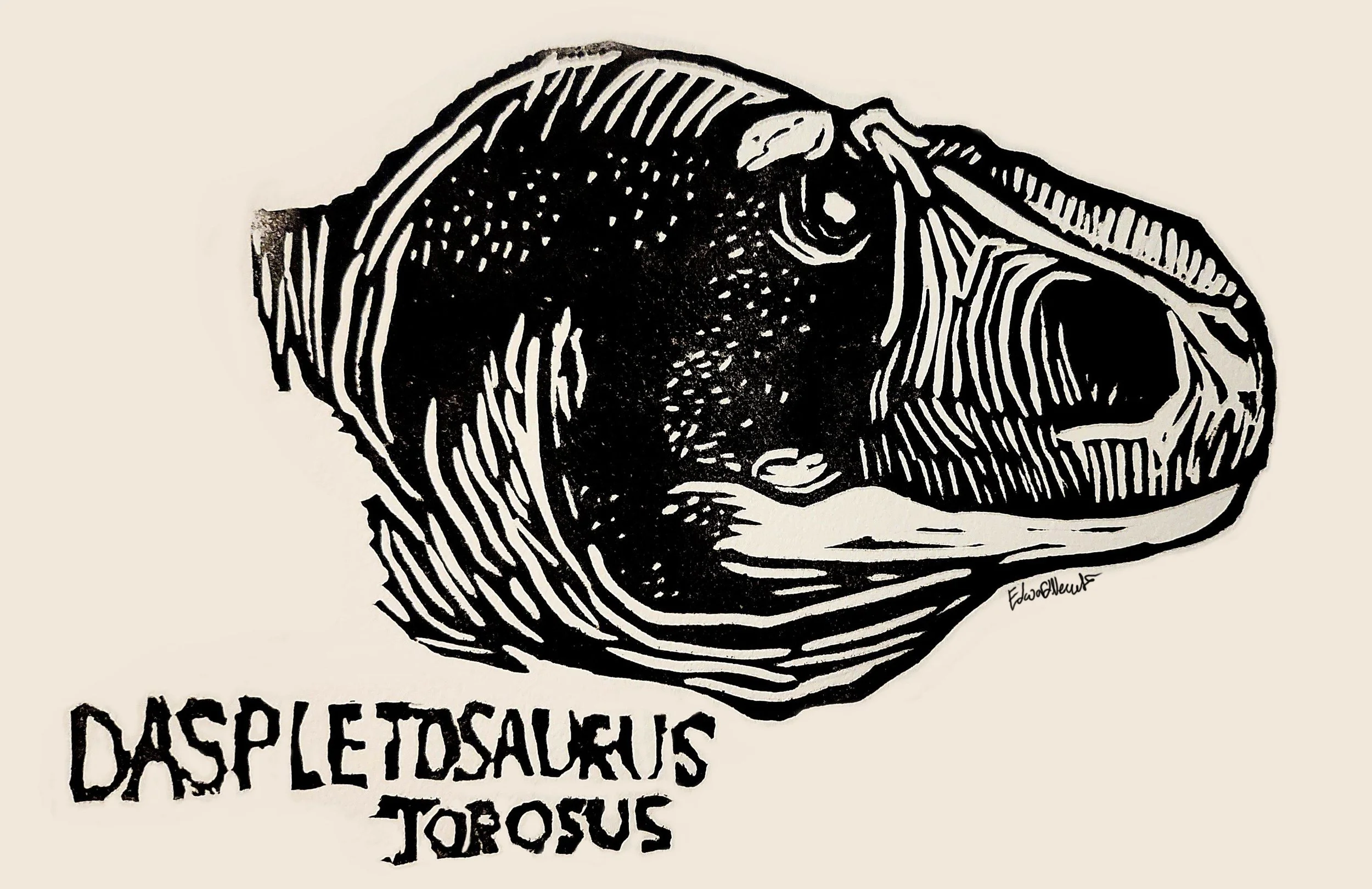
Each animal is posed differently and struts a unique silhouette. The smaller fully-feathered dinosaurs are in motion- stalking, chasing, surveying. The larger, sparsely-feathered giants are static- showing off their heavy anatomy and foreboding presence. . Daspletosaurus and Tyrannosaurus both have bony ridges above their eyes, but the ridges on Tyrannosaurus are larger and more pronounced. Nanuqsaurus and Dryptosaurus are similarly sized, but Dryptosaurus has longer claws. Lythronax wields a relatively narrow snout compared to its larger cousins, but still more robust than the slender Nanotyrannus.
-
![]()
Lythronax argestes & Tyrannosaurus Rex
-
![]()
Dryptosaurus aquilunguis
-
![]()
Nanotyrannus Lethaeus
-
![]()
Nanuqsaurus hoglundi
-
![]()
Daspletosaurus torosus